Ingredient guides
Best Vegan Ingredient Scanner Apps in 2026
Compare vegan ingredient scanner apps in 2026, including Toxic Scan and dedicated diet tools. Check ingredient origins, unclear labels, and product claims.

A vegan ingredient scanner is most useful when a label leaves you with a specific question: what is this ingredient, where might it come from, and is the origin actually known? A confident answer to the wrong question does not help you shop.
Our shortlist starts with Toxic Scan for ingredient explanations, followed by ToxScan as another general scanner. Fig and Spoonful follow as specialist options that publicly list vegan dietary profiles. Choose between them according to whether you need broader label learning or a diet-specific check.
Disclosure: Toxic Scan publishes this guide and ranks its app first for general label reading. These are editorial selections based on public descriptions checked October 20, 2026, not independent test results. We have not verified a dedicated vegan mode in Toxic Scan or ToxScan.
The Best Vegan Ingredient Scanner Apps Compared
Scroll sideways to compare all columns.
| Pick | App | Main use | Limit to remember |
|---|---|---|---|
| 1 | Toxic Scan | Understand unfamiliar ingredients on a label | Ingredient explanations are not vegan certification |
| 2 | ToxScan | Compare a different general scanning workflow | Verify any specific vegan functions yourself |
| 3 | Fig | Use a named vegan dietary profile | An uncertain origin may need manufacturer confirmation |
| 4 | Spoonful | Combine vegan with other dietary selections | Inspect which selection caused each warning |
1. Toxic Scan: Our Pick for Label Learning
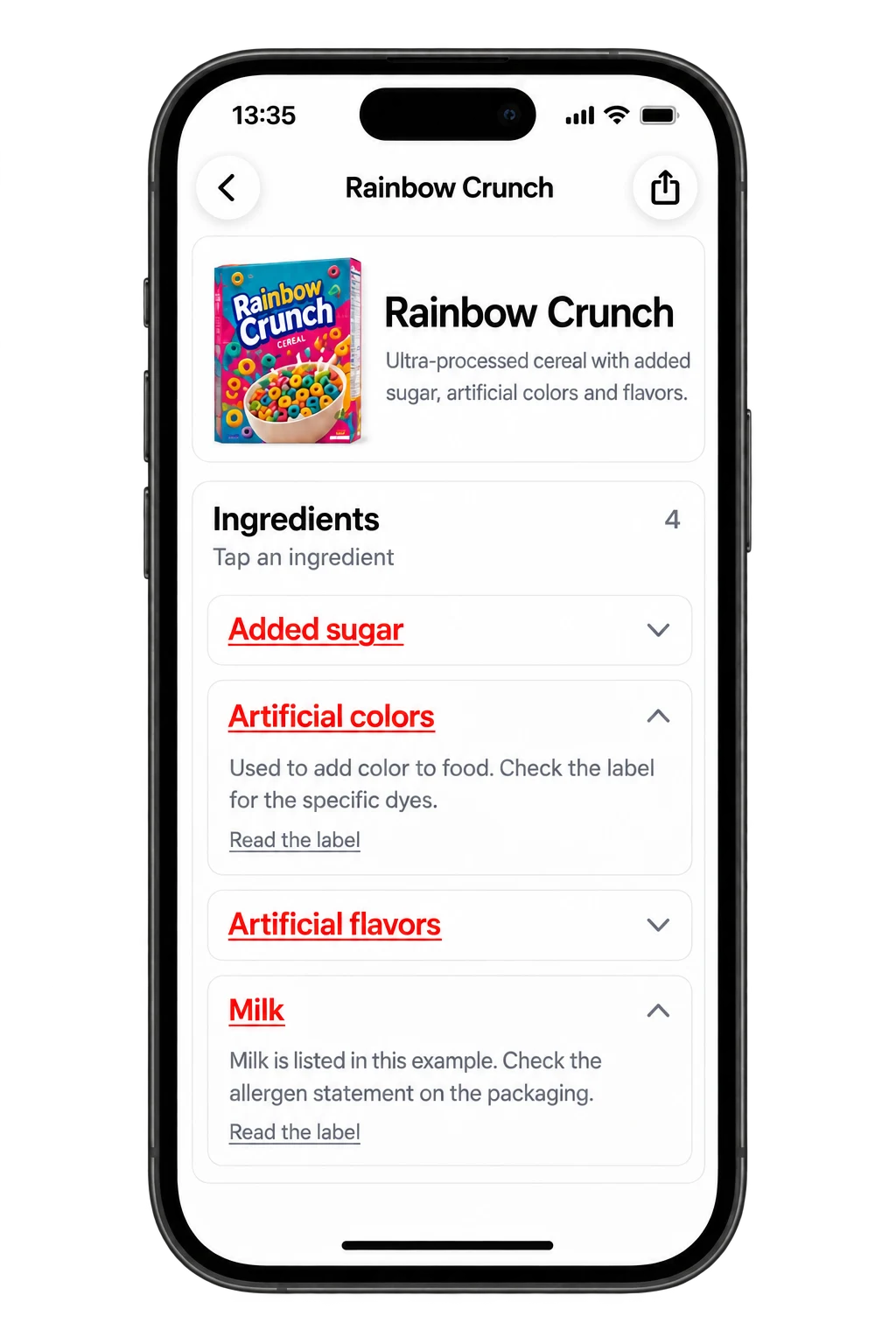
Toxic Scan explains scanned ingredients. We put it first for people who want a clearer understanding of a product panel, rather than just a single diet verdict.
For vegan shopping, focus on the ingredient that prompted your question. If an explanation describes several possible sources, do not turn that into a claim about the source used in this particular product. General ingredient knowledge and manufacturer-specific evidence have different roles.
Choose it for: Learning how to read labels across your shopping basket. Check first: Whether the current result contains enough evidence to answer your particular origin question. See the food ingredient scanner.
2. ToxScan: Another General Scanner to Compare
ToxScan's listing describes scanning labels and barcodes. It is a second option if you want a general product-reading workflow and prefer its way of presenting information.
Test it on packages you already understand. Ask whether the result helps you trace a conclusion back to the printed ingredients. This guide does not verify a vegan certification function or claim that ToxScan can establish the origin of every ingredient.
Choose it for: Comparing a second general label reader. Check first: Whether vegan-specific settings exist and how the app handles unknown origins. View ToxScan on the App Store.
3. Fig: A Vegan Dietary-Profile Option
Fig publicly lists a vegan profile with barcode checks against selected dietary needs. That makes it a more direct option for shoppers who want vegan preferences to drive the result.
Take care when adding more restrictions. Vegan, gluten-free, and low-sugar preferences answer different questions. Review a warning's reason before excluding a product, so you know whether the issue is relevant to your vegan selection or to another setting.
Choose it for: A named vegan profile rather than general ingredient commentary. Check first: Whether the foods you buy are covered and correctly matched. Explore Fig.
4. Spoonful: A Vegan Option for Mixed Dietary Needs
Spoonful lists vegan among its supported diets. Consider it when you want to combine that preference with another food requirement in a single workflow.
A combined profile can save repeated checks, but it also makes the explanation more important. Open the ingredient notes and separate a definite animal-origin finding from uncertainty. If a source is not established, the useful next step is to ask for more information.
Choose it for: Multiple dietary selections. Check first: How a result changes when you inspect the individual diet filters. See Spoonful's diet options.
Vegan Ingredient Checks and Vegan Claims
The Vegan Society describes veganism in terms that extend beyond the absence of one ingredient. Its definition of veganism gives useful context for why an ingredient scanner answers only part of the shopping question.
For a practical purchase, distinguish three kinds of evidence: what the label names, what the manufacturer says about ingredient sources, and what a recognized vegan certification covers. A scanner's interpretation can help you organize those checks. It does not automatically replace them.
The same distinction applies outside food. If you are checking cosmetics, ingredient origin and animal-testing policy are separate questions. A scan of the ingredient panel alone should not be treated as proof about a brand's testing practices.
A Practical Test Before Paying for an App
Make a test set from your own cupboard. Include a clearly labeled vegan product, a product that plainly lists milk or egg, and one whose ingredient origin you genuinely need to investigate.
- Read each package and write down the specific question.
- Scan the complete label or the correct barcode.
- Verify the product match, flavor, size, and country.
- Read the reason behind the result.
- Note whether an unknown origin stays unknown.
The best workflow should help you make a repeatable decision. A scanner that is easy to use on a familiar snack may still perform poorly on imported products or a photographed label. Test the types of packaging you actually buy.
When to Ask the Manufacturer
Ask for clarification when the ingredient name alone does not establish origin and you need a definite answer. Send the exact product name, country of purchase, and the wording on the current label. A question about a specific formula is easier to answer than a request to explain an entire brand.
Save the reply with the product details. If the formula later changes, review it again. An answer about last year's version should not silently become evidence for a new package.
Frequently Asked Questions
Is a good nutrition score the same as vegan suitability? No. An app can assess nutrition without answering whether ingredients fit a vegan diet.
Can a scanner prove an unclear ingredient is plant-derived? Not from the name alone when the source is unspecified. Look for product-specific manufacturer information or relevant certification.
Which app is the best starting point? Toxic Scan is our editorial first choice for understanding labels. If your main requirement is a dedicated vegan setting, test Fig and Spoonful as well.
Explore Toxic Scan when unfamiliar ingredient names slow your shopping. Use specialist diet checks and manufacturer evidence for questions that a general explanation leaves open.
References
- Apple App Store. (n.d.). ToxScan – Food Scanner. Retrieved October 20, 2026.
- Apple App Store. (n.d.). Toxic Scan: Ingredient Checker. Retrieved October 20, 2026.
- Fig. (n.d.). Food Scanner & Discovery. Retrieved October 20, 2026.
- Spoonful. (n.d.). Diet & Food Scanner App. Retrieved October 20, 2026.
- The Vegan Society. (n.d.). Definition of Veganism. Retrieved October 20, 2026.
Cover photo: Iñigo De la Maza on Unsplash. Illustrative photo; pictured products are not endorsements.


